
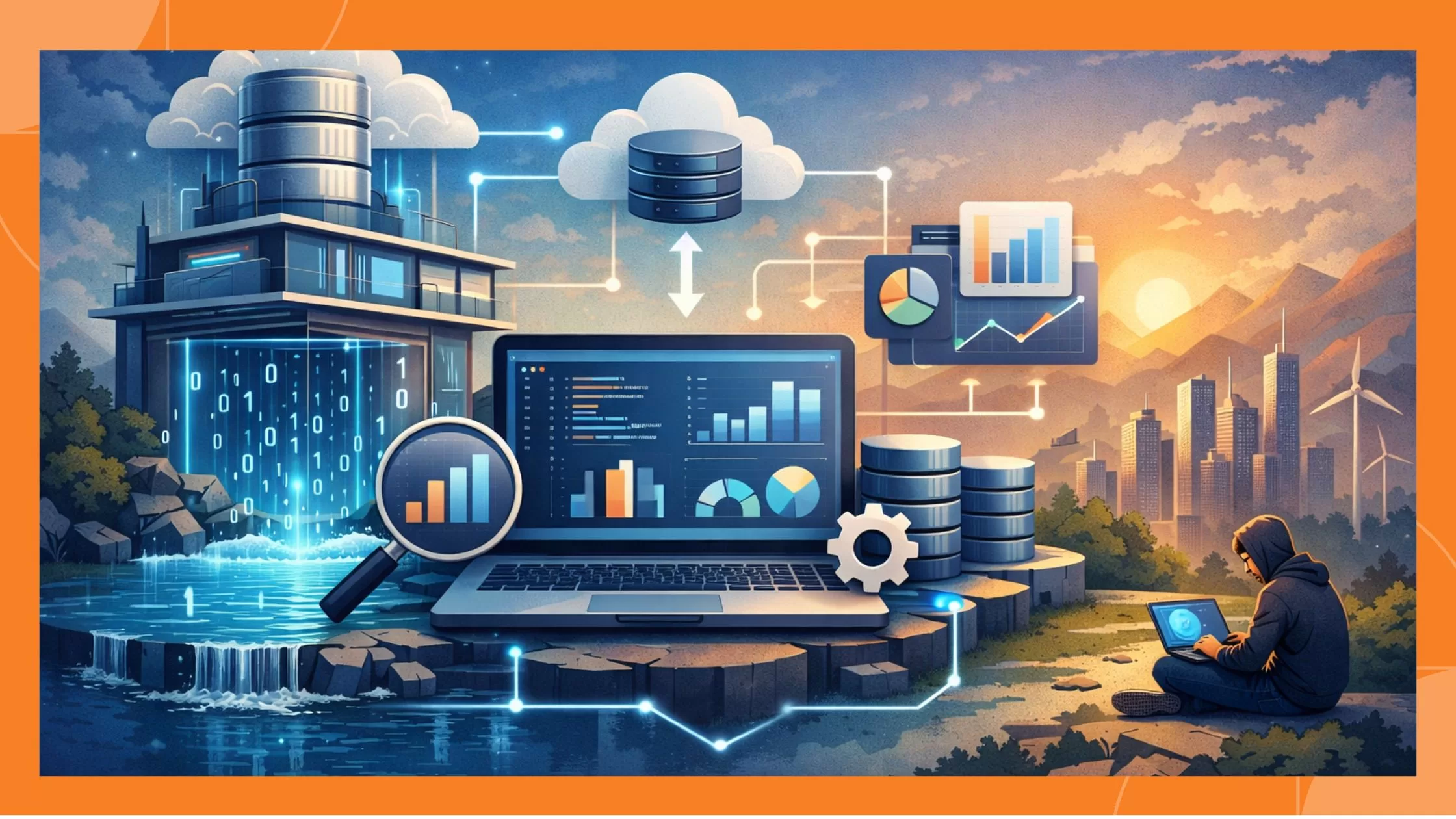
Organizations today struggle with managing structured and unstructured data across multiple systems. Traditional warehouses are expensive and rigid, while data lakes often lack governance and performance controls.
Understanding data lakehouse benefits helps businesses reduce costs, enable unified analytics, and build AI-ready data platforms.
In this guide, you will learn how lakehouses work, compare Delta Lake and Snowflake lakehouse solutions, explore real-world use cases, and discover whether this architecture is right for your organization.
First off, What is a Data lakehouse?
What Is Lakehouse Architecture?
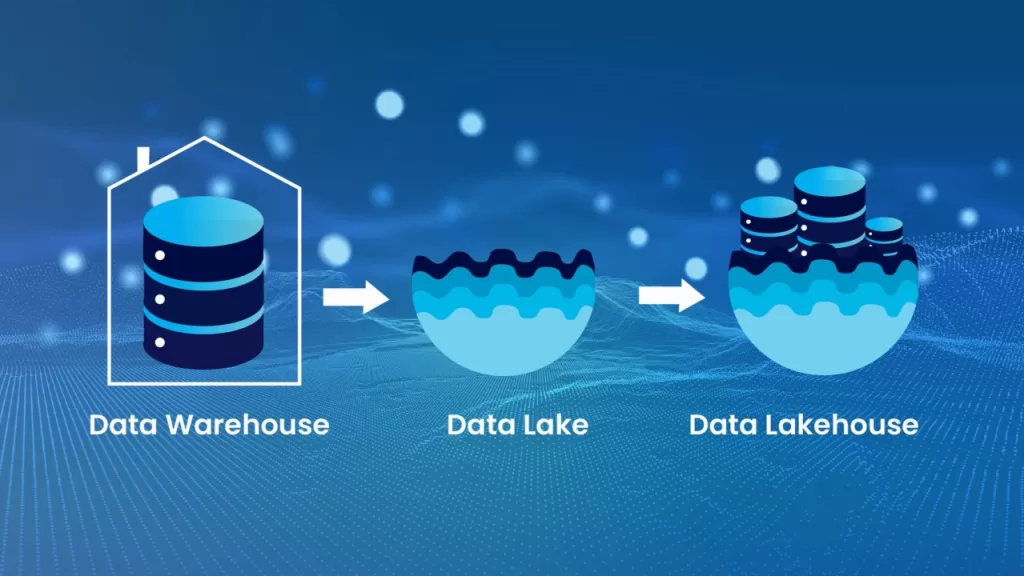
Lakehouse architecture is a modern data design that merges:
- The low-cost storage of data lakes
- The structured performance of data warehouses
Unlike traditional systems that separate analytics engines from storage layers, a lakehouse supports unified analytics — BI dashboards, AI models, and streaming workloads all operate from the same platform, without duplication.
To understand why this matters, it helps to see how a lakehouse stacks up against the systems it replaces:
Feature | Data Warehouse | Data Lake | Data Lakehouse |
Data Type | Structured | All types | All types |
Governance | Strong | Weak | Strong |
Cost | High | Low | Balanced |
AI Support | Limited | High | Very High |
As the table shows, a lakehouse doesn’t just split the difference — it inherits the strengths of both systems while addressing their individual weaknesses.
Data Lakehouse Architecture Components:
A data lakehouse architecture consists of several layers that work together to store, process, and manage data efficiently.
Storage Layer:
This layer stores large volumes of data using scalable cloud storage platforms like Amazon S3 or Azure Data Lake Storage.
Metadata Layer:
It manages schemas, table formats, and transactions. Technologies such as Delta Lake help maintain data consistency and version control.
Processing Layer:
This layer processes and analyzes data using engines like Apache Spark, enabling large-scale analytics and data transformation.
Governance Layer:
It ensures data security, quality, and access control, helping organizations maintain reliable and compliant data systems.
| Architecture | Strength | Limitation |
| Data Warehouse | High performance | Expensive, rigid |
| Data Lake | Scalable, low-cost | Weak governance |
| Lakehouse | Balanced, scalable, governed | Requires modern implementation strategy |
Technologies like Delta Lake introduce ACID transactions and schema enforcement, while platforms like Snowflake lakehouse provide fully managed, cloud-native scalability.
Want to learn how to build modern data architectures? Explore hands-on training programs from Academy 360.
Top 7 Data Lakehouse Benefits for Modern Enterprises
📌 Summary: Key Data Lakehouse Benefits
- Unified storage for structured and unstructured data
- Lower infrastructure and storage costs
- Independent scaling of compute and storage
- Strong data governance and reliability
- Real-time data processing capabilities
- AI and machine learning readiness
- Reduced data silos across organizations
Organizations adopt lakehouse architecture because it combines the flexibility of data lakes with the governance and performance of data warehouses. Below are the most impactful data lakehouse benefits for modern enterprises.
1. Unified Storage and Unified Analytics
All data types — structured and unstructured — are stored in one platform. BI tools, data science workflows, and machine learning models access the same data source without duplication.
2. Lower Infrastructure Costs
Lakehouses rely on object storage such as Amazon S3 or Azure Data Lake Storage, which significantly reduces storage costs compared to traditional warehouse systems.
3. Independent Compute Scaling
Storage and compute resources are separated. This allows organizations to scale processing power independently and optimize performance without increasing storage costs.
4. Strong Data Governance
Technologies like Delta Lake provide features such as ACID transactions, schema validation, and data versioning, helping organizations maintain reliable and well-governed datasets.
5. Real-Time Data Processing
Lakehouse platforms support streaming data ingestion and real-time analytics, which are essential for applications like fraud detection, IoT monitoring, and operational dashboards.
6. AI and Machine Learning Enablement
Because data is centralized and governed, machine learning teams can build and train models directly on production-grade data without moving it between multiple systems.
7. Reduced Data Silos
By consolidating multiple analytics platforms into a single architecture, organizations reduce data silos and enable faster, more informed decision-making. These data lakehouse benefits make the architecture highly valuable for organizations pursuing modern data strategies and digital transformation initiatives.
Best Practices:
Building a reliable lakehouse isn’t just about picking the right tools — it’s about putting the right foundations in place. Here are the practices that matter most.
Implement medallion architecture:
Organize data into Bronze (raw), Silver (cleansed), and Gold (curated/aggregated) layers for better management. This tiered approach ensures data is progressively refined, making it easier to trace lineage and maintain quality at every stage of the pipeline.
Use open table formats:
Utilize Delta Lake, Iceberg, or Hudi for reliable, ACID-compliant transactions. These formats also support schema evolution and time travel, giving teams the flexibility to adapt data structures without breaking downstream workflows.
Optimize data layout:
Partition, index, and compact data files regularly to maintain high query performance. As data volumes grow, consistent optimization prevents query slowdowns and reduces unnecessary compute costs.
Role-based access control (RBAC):
Implement granular, view-based security to govern access to data. Tying permissions to roles rather than individuals makes access management scalable and audit-ready as teams grow.
Data quality monitoring:
Use automated validation tools to flag anomalies, null values, and schema drift before they reach downstream consumers. Reliable data at the source means fewer surprises in dashboards and AI models.
Metadata management:
Maintain a centralized metadata catalog to improve data discoverability across teams. When engineers and analysts can quickly understand what data exists, where it came from, and how it’s structured, collaboration becomes significantly faster.
Challenges of lakehouse architecture:
While a lakehouse offers compelling advantages, it isn’t without its hurdles. Teams adopting this architecture should be prepared to navigate a few key challenges.
Complex setup:
A lakehouse doesn’t come pre-configured — it demands deliberate architecture planning from the start. Without a clear design for storage layers, compute separation, and data flow, teams can quickly end up with a system that’s hard to scale or maintain.
Data governance:
Storing all data types in one place makes governance more complex. Strong policies, access controls, and dedicated tooling are essential to ensure data stays compliant, traceable, and trustworthy — especially as more teams gain access.
Performance optimization:
At scale, query performance doesn’t happen automatically. Large datasets require well-thought-out partitioning strategies, regular file compaction, and indexing to prevent slow queries from becoming a bottleneck for analytics and AI workloads.
Real-World Use Cases
Lakehouse adoption spans industries — and the companies leading the charge aren’t just experimenting. They’re seeing measurable, bottom-line results. Here’s how four industries are putting it to work.
Retail — Customer 360 & Personalization (e.g. Walmart, Target)
Retailers unify online behavior, purchase history, and loyalty data into a single platform to power real-time personalization engines. This eliminates data silos between e-commerce and in-store systems that traditionally slowed down campaign execution. The result: up to 20% lift in conversion rates, 35% reduction in data prep time, and one unified platform for all customer data.
Finance — Real-Time Fraud Detection (e.g. JPMorgan, Stripe)
Financial institutions stream transaction data directly into the lakehouse, running ML models in near real-time to flag anomalies. Unlike batch-based legacy systems, this approach cuts detection latency from hours to under 50 milliseconds — before damage is done. Industry-wide, smarter fraud detection helps prevent an estimated $40 billion in losses annually, with 60% fewer false positives.
Healthcare — Predictive Patient Outcomes (e.g. Mayo Clinic, Pfizer)
Healthcare providers consolidate EHR records, lab results, imaging data, and wearable signals into a unified lakehouse. Predictive models trained on this data identify high-risk patients earlier, enabling proactive intervention that improves outcomes and reduces readmissions by up to 30% — all within a HIPAA-compliant storage environment.
Marketing — Unified Campaign Analytics (e.g. Airbnb, Netflix)
Marketing teams blend behavioral clickstream data, CRM records, and transaction history into a single lakehouse layer. This gives analysts a complete picture of the customer journey — enabling attribution modeling, churn prediction, and hyper-targeted segmentation. Teams report 2x faster campaign iteration and up to 25% lower customer acquisition costs.
Notable adopters: Netflix, Uber, Airbnb, Walmart, JPMorgan, Stripe, Pfizer, Mayo Clinic
These implementations show that lakehouse architecture isn’t a trend — it’s becoming the data infrastructure standard for organizations that need speed, scale, and intelligence from the same platform.
Tools & Technologies in a Modern Lakehouse Stack
A typical lakehouse ecosystem isn’t a single tool — it’s a carefully layered stack where each component plays a distinct role. Here’s how the pieces fit together:
Storage: The foundation of any lakehouse. Cloud object stores provide low-cost, scalable storage that decouples data from computers such as
- AWS S3
- Azure Data Lake Storage
- Google Cloud Storage
Table Formats: Open formats that sit on top of storage, enabling ACID transactions, schema evolution, and time travel directly on raw files. Some of these tools are:
- Delta Lake
- Apache Iceberg
- Apache Hudi
Processing: Distributed compute engines that read from storage and table formats to run transformations, ML pipelines, and streaming workloads at:
- scaleApache Spark
- Apache Flink ·
- Databricks
Lakehouse Platforms: End-to-end managed platforms that bundle storage, processing, and governance into a unified experience. Here area few examples:
- Databricks Lakehouse
- Snowflake
- Azure Synapse Analytics
Governance & Cataloging: Tools that track metadata, enforce access policies, and make data discoverable across teams. These tools are:
- Apache Atlas
- Unity Catalog
- AWS Glue Data Catalog
Analytics & BI: The consumption layer where analysts and business users query, visualize, and report on curated data. Examples:
- Power BI
- Tableau
- Looker
This combination enables scalable, unified analytics across departments — with each layer purpose-built to handle its part of the data journey, from raw ingestion all the way to business insight.
How to Implement a Data Lakehouse?
Organizations can build a modern data lakehouse by following a structured implementation approach that combines scalable storage, reliable data management, and powerful analytics tools.
1. Choose Cloud Storage
Start with scalable object storage such as Amazon S3 or Azure Data Lake Storage to store large volumes of structured and unstructured data.
2. Implement Open Table Formats
Use open table formats like Delta Lake, Apache Iceberg, or Apache Hudi to enable features such as ACID transactions, schema enforcement, and reliable data versioning.
3. Build Medallion Architecture
Organize data into Bronze (raw data), Silver (cleaned data), and Gold (business-ready data) layers to improve data quality and simplify analytics workflows.
4. Add Analytics Engines
Integrate powerful processing engines like Apache Spark to run data transformations, analytics queries, and machine learning workloads.
5. Implement Governance Policies
Establish governance frameworks with access controls, data quality checks, and monitoring tools to ensure secure and compliant data usage across the organization.
FAQs
Data lakehouse benefits include lower infrastructure costs, scalable storage, unified analytics, strong data governance, and support for AI and machine learning workloads within a single platform.
A data warehouse mainly stores structured data for reporting and analytics, while a data lakehouse supports both structured and unstructured data and enables advanced workloads such as real-time analytics and machine learning.
Common tools include Apache Spark, Delta Lake, and cloud storage platforms like Amazon S3 or Azure Data Lake Storage.
Yes, lakehouse architecture centralizes large volumes of data in a governed platform, allowing machine learning teams to build and train models directly on reliable production data.
Yes, Delta Lake is an open-source storage layer that works with Apache Spark to provide ACID transactions, schema enforcement, and data versioning for reliable analytics.
Wrapping up:
Data lakehouse architecture combines the scalability of data lakes with the governance and performance of data warehouses. As organizations move toward AI-driven analytics, unified and cost-efficient data platforms are becoming essential for modern data strategies.
Build Lakehouse Skills with Big Data Trunk
Learn how to design real-world data platforms with Big Data Trunk. Gain hands-on experience with tools like Delta Lake and Snowflake, and start building the skills needed for modern data engineering.
In this guide, you will learn how lakehouses work, compare Delta Lake and Snowflake lakehouse solutions, explore real-world use cases, and discover whether this architecture is right for your organization.